MONIQUE LACEY
b. 1960 Utrecht, Netherlands. d. 2026 Auckland, New Zealand
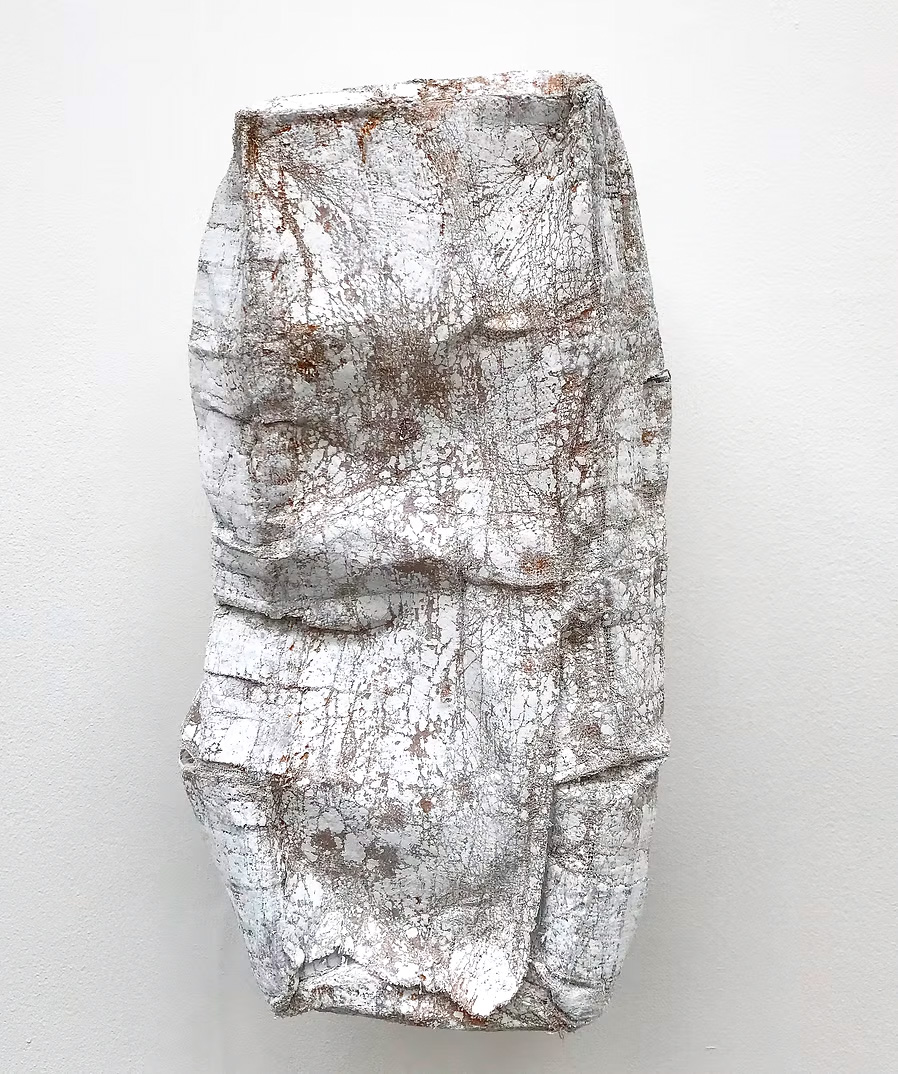
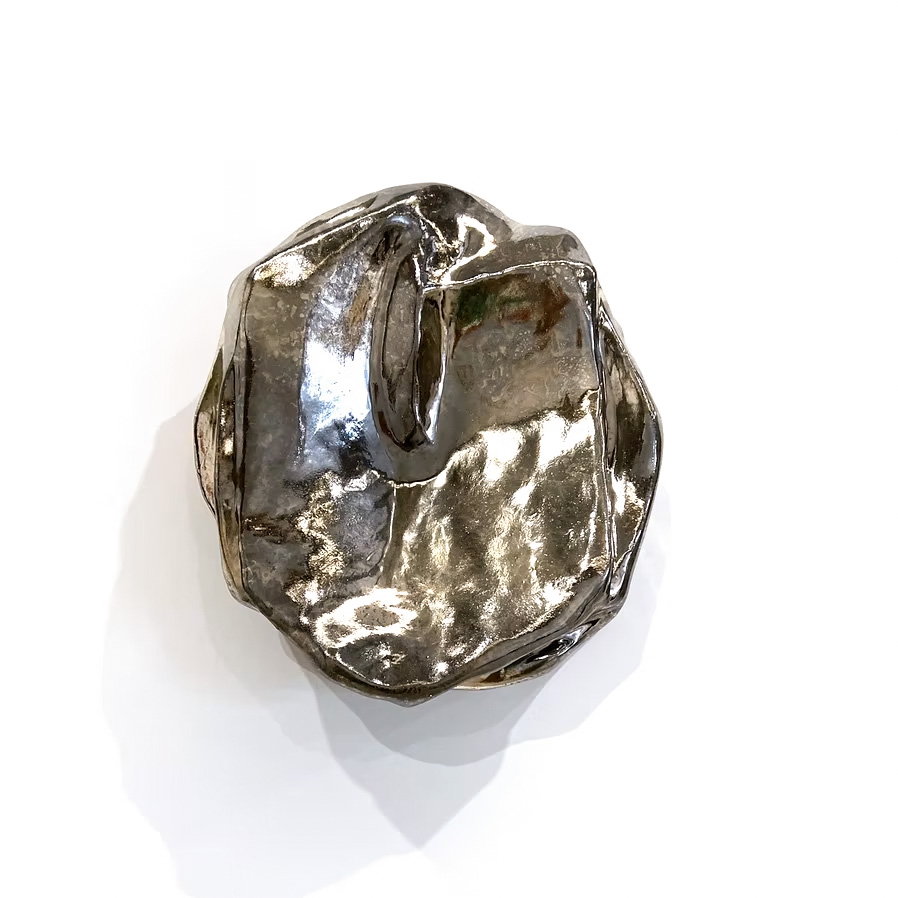
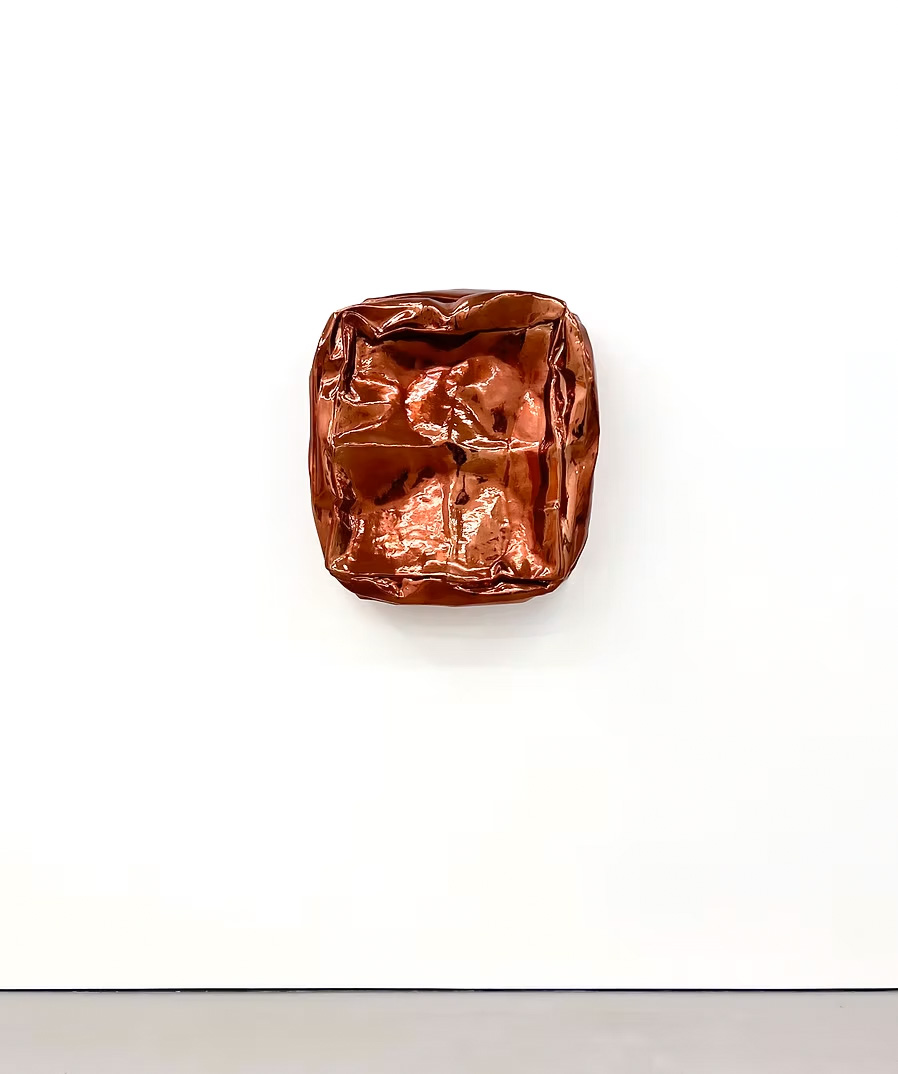
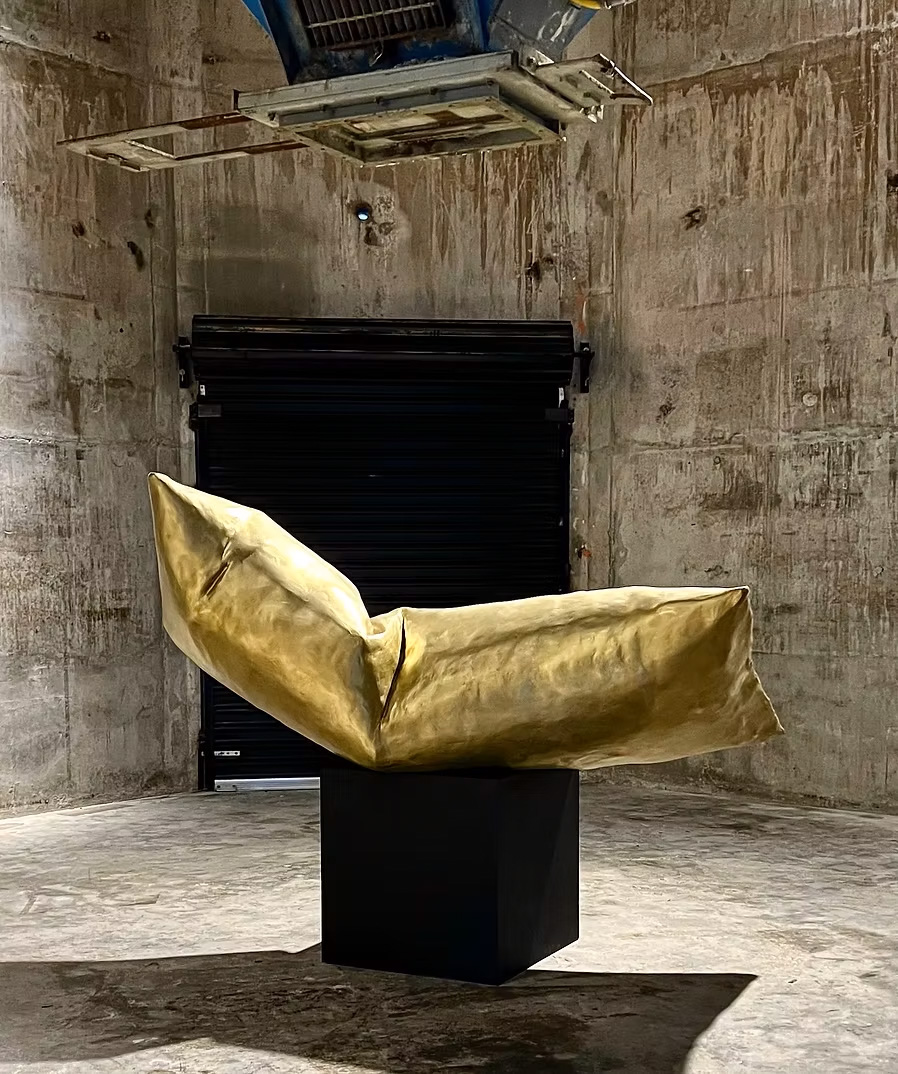
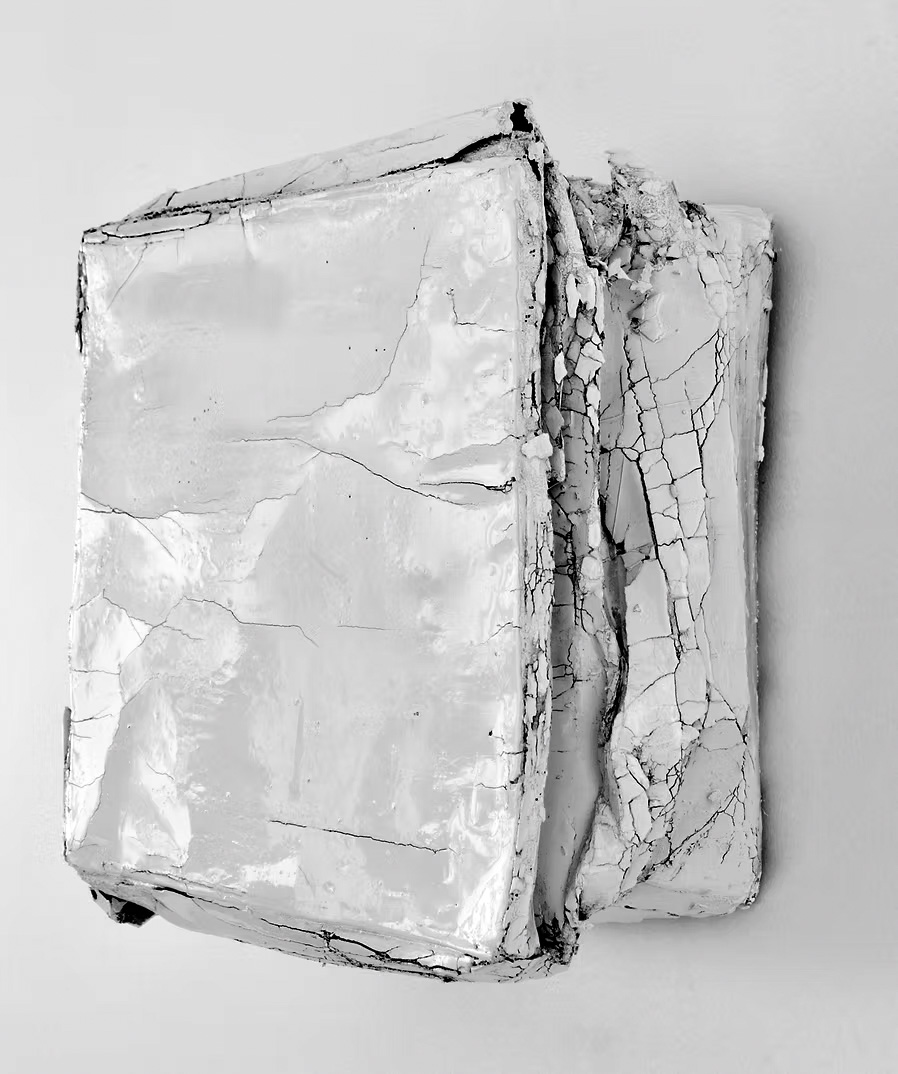
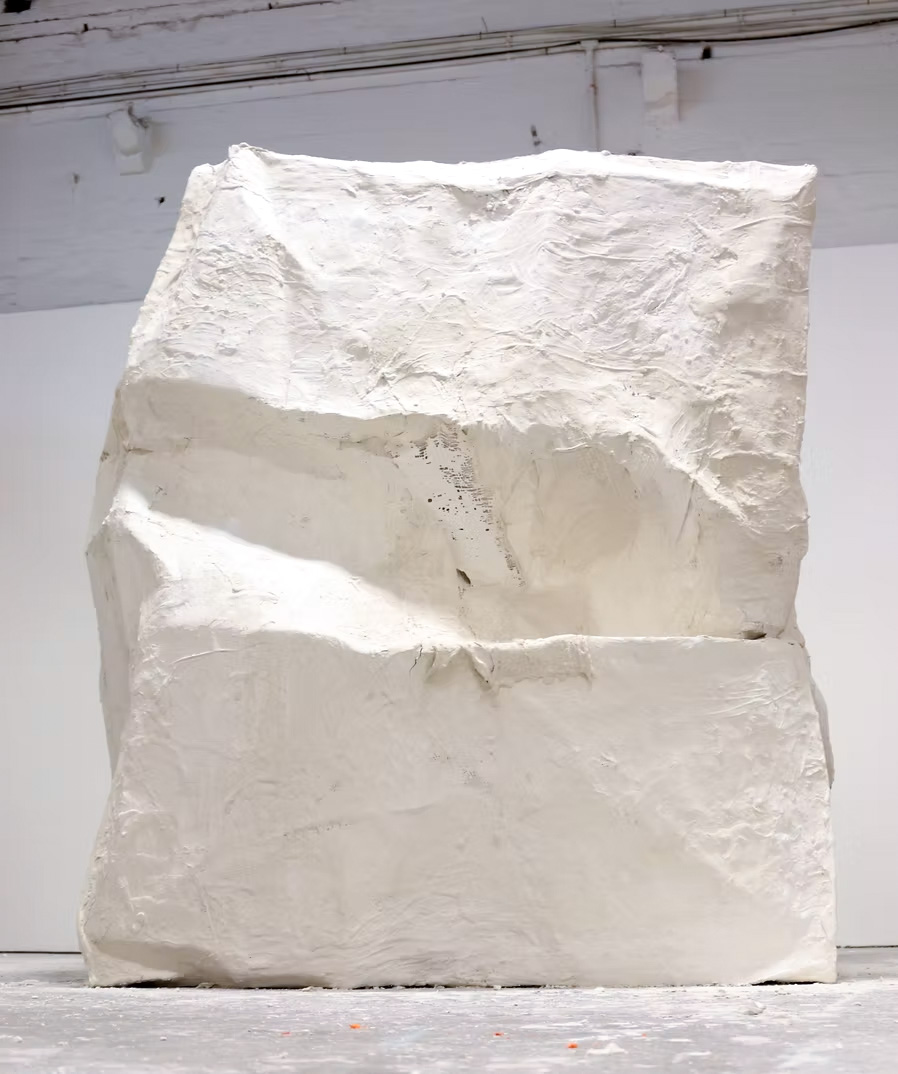
Beginning with commercially available packaging materials Monique Lacey constructed sculptures that oscillated between the utilitarian and the uncanny. These boxes, once assembled, were submerged beneath successive skins of plaster, pigment, fibreglass, wax and resin. The surfaces becomes a site of both concealment and disclosure, where the humble cardboard substrate is simultaneously effaced and exalted. Crucially, these structures were not left intact; crushed using Lacey’s own bodyweight, a gesture that straddles violence and play, absurdity and critique.
If Minimalism sought purity and anonymity in industrial materials, Lacey’s work unsettled that legacy. It recalls the “specific object” yet insists on the indexical trace of the maker, present not through heroic gesture, but through acts of calculated defacement. The surfaces refuse the sleek finishes of Judd or Morris, opting instead for a material instability that complicates hierarchies of value. What emerged was a practice that inhabited the space between sculpture and painting, surface and form, ruin and reinvention.
Lacey’s engagement with our post-truth era surfaced most pointedly through her choice of titles. ‘Stable Genius’, ‘Flip Flopper’, and 'Quid Pro Quo’ were not just pulled from political soundbites, but were artefacts of a fractured discourse. In a 24-hour media cycle governed by repetition, contradiction and spin, these phrases circulate less as meaning than as noise - a kind of echo chamber that mirrors the conditions under which we now receive and process information.
For Lacey, figures like Donald Trump emerged not as direct subjects, but as avatars of this condition, and for a moment in history where spectacle eclipses substance, and language itself is destabilised. Trump’s incoherence along with a resistance to fact, all point to a cultural terrain in which the boundaries between sincerity and satire, and truth and fiction are no longer clearly drawn. In this context, Lacey’s titles function like 'glitches in the matrix' - each possessing a snappy soundbite logic that dissolves on contact.
By collapsing political language into sculptural form, Lacey didn’t resolve this tension insomuch as she materialised it. Her works echo the collapse of certainty itself and in a post-truth-post-capitalist world, her crumpled forms perhaps read less as ruins than as emblems of our uncertain present. Shaped by distortion, dissonance and instability, they mirror the ways we are already living, thinking, and making meaning on a ground that is constantly shifting beneath our feet.
Monique Lacey passed away on May 12, 2026. She will be deeply missed.
b. 1960 Utrecht, Netherlands. d. 2026 Auckland, New Zealand
Beginning with commercially available packaging materials Monique Lacey constructed sculptures that oscillated between the utilitarian and the uncanny. These boxes, once assembled, were submerged beneath successive skins of plaster, pigment, fibreglass, wax and resin. The surfaces becomes a site of both concealment and disclosure, where the humble cardboard substrate is simultaneously effaced and exalted. Crucially, these structures were not left intact; crushed using Lacey’s own bodyweight, a gesture that straddles violence and play, absurdity and critique.
If Minimalism sought purity and anonymity in industrial materials, Lacey’s work unsettled that legacy. It recalls the “specific object” yet insists on the indexical trace of the maker, present not through heroic gesture, but through acts of calculated defacement. The surfaces refuse the sleek finishes of Judd or Morris, opting instead for a material instability that complicates hierarchies of value. What emerged was a practice that inhabited the space between sculpture and painting, surface and form, ruin and reinvention.
Lacey’s engagement with our post-truth era surfaced most pointedly through her choice of titles. ‘Stable Genius’, ‘Flip Flopper’, and 'Quid Pro Quo’ were not just pulled from political soundbites, but were artefacts of a fractured discourse. In a 24-hour media cycle governed by repetition, contradiction and spin, these phrases circulate less as meaning than as noise - a kind of echo chamber that mirrors the conditions under which we now receive and process information.
For Lacey, figures like Donald Trump emerged not as direct subjects, but as avatars of this condition, and for a moment in history where spectacle eclipses substance, and language itself is destabilised. Trump’s incoherence along with a resistance to fact, all point to a cultural terrain in which the boundaries between sincerity and satire, and truth and fiction are no longer clearly drawn. In this context, Lacey’s titles function like 'glitches in the matrix' - each possessing a snappy soundbite logic that dissolves on contact.
By collapsing political language into sculptural form, Lacey didn’t resolve this tension insomuch as she materialised it. Her works echo the collapse of certainty itself and in a post-truth-post-capitalist world, her crumpled forms perhaps read less as ruins than as emblems of our uncertain present. Shaped by distortion, dissonance and instability, they mirror the ways we are already living, thinking, and making meaning on a ground that is constantly shifting beneath our feet.
Monique Lacey passed away on May 12, 2026. She will be deeply missed.
Beginning with commercially available packaging materials Monique Lacey constructed sculptures that oscillated between the utilitarian and the uncanny. These boxes, once assembled, were submerged beneath successive skins of plaster, pigment, fibreglass, wax and resin. The surfaces becomes a site of both concealment and disclosure, where the humble cardboard substrate is simultaneously effaced and exalted. Crucially, these structures were not left intact; crushed using Lacey’s own bodyweight, a gesture that straddles violence and play, absurdity and critique.
If Minimalism sought purity and anonymity in industrial materials, Lacey’s work unsettled that legacy. It recalls the “specific object” yet insists on the indexical trace of the maker, present not through heroic gesture, but through acts of calculated defacement. The surfaces refuse the sleek finishes of Judd or Morris, opting instead for a material instability that complicates hierarchies of value. What emerged was a practice that inhabited the space between sculpture and painting, surface and form, ruin and reinvention.
Lacey’s engagement with our post-truth era surfaced most pointedly through her choice of titles. ‘Stable Genius’, ‘Flip Flopper’, and 'Quid Pro Quo’ were not just pulled from political soundbites, but were artefacts of a fractured discourse. In a 24-hour media cycle governed by repetition, contradiction and spin, these phrases circulate less as meaning than as noise - a kind of echo chamber that mirrors the conditions under which we now receive and process information.
For Lacey, figures like Donald Trump emerged not as direct subjects, but as avatars of this condition, and for a moment in history where spectacle eclipses substance, and language itself is destabilised. Trump’s incoherence along with a resistance to fact, all point to a cultural terrain in which the boundaries between sincerity and satire, and truth and fiction are no longer clearly drawn. In this context, Lacey’s titles function like 'glitches in the matrix' - each possessing a snappy soundbite logic that dissolves on contact.
By collapsing political language into sculptural form, Lacey didn’t resolve this tension insomuch as she materialised it. Her works echo the collapse of certainty itself and in a post-truth-post-capitalist world, her crumpled forms perhaps read less as ruins than as emblems of our uncertain present. Shaped by distortion, dissonance and instability, they mirror the ways we are already living, thinking, and making meaning on a ground that is constantly shifting beneath our feet.
Monique Lacey passed away on May 12, 2026. She will be deeply missed.